MARS JOURNAL



|
MARS JOURNAL
|
|
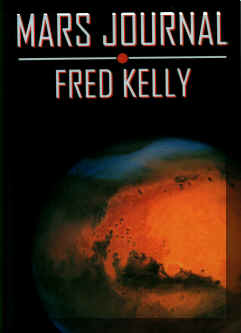
Thank you for visiting my web site. Fred Kelly, MD MARS JOURNAL Thirteen year old Kate Bandara dreamed of going to Mars. Just when it looked like she might have a chance to realize her dream, a rock climbing accident crushed both legs under a two ton boulder. As a double amputee, her goal seemed unobtainable. During her rehabilitation, the Director of World Space Corporation (a fictional nonprofit group that manages all manned spaceflight operations for NASA) asks Kate to study the feasibility of a mission to colonize the planet Mars. Who eventually leads that mission to a successful and exciting conclusion? Astronaut Kate Bandara! While writing this book, I tried not to dodge any of the problems that NASA must face while planning a mission to Mars. However, many of the tough problems of interplanetary space flight remain unanswered--weightlessness, radiation, and isolation to name a few. The solutions in this book are drawn from the best information that I had available, and the technology used is either available at this time or is a reasonable extension of today's technology. Writing this book was a unique opportunity. How often does a NASA flight surgeon get a chance to review the history of manned space flight and to plan and carry out a mission to another world? Through the eyes of my fictional characters, I experienced the excitement of an adventure that no one has ever attempted. Some will undoubtedly not agree with some of the solutions to unanswered problems. Good! There are other reasonable solutions to the problems we face. Perhaps NASA can overcome their fiscal and administrative problems without the reorganization suggested in this book. I hope so. Astronaut Kate Bandara, when she was just a thirteen-year-old girl, decided that she wanted to live on the planet MARS. Few people set lofty goals for their life, and fewer still are willing to do all the things required to give them a realistic chance of reaching those goals. Kate was one of those exceptional people. This is the story of her struggle against almost overwhelming odds and her triumph as she leads the first mission to colonize MARS. This is her journal. MARS JOURNAL is available on line for $14.95 plus shipping and handling from Infinity Publications at www.buybooksontheweb.com or by calling Infinity Publications at 1-877-buy-book. (1-877-289-2665)
(Note) I am currently writing Mars Journal II which will continue the story line and highlight some of the real problems we face when we attempt to send humans on long duration space missions. I will include the introduction to Mars Journal II at the end of this page.
THE FOURTH GENERATION
The 9/11 events in New York and Washington (and the Iraqi war) were not predicted in this book, but when I wrote this book who would have thought that terrorism could strike at the heart of America. Who would have thought that a Soviet citizen would try to prevent terrorism against Americans. And who would have thought that innocent lives could be taken with no more regret than slitting the throat of a sacrificial lamb. Unfortunately, the events of 9/11 and today's wars make this book even more timely today than it was when it was published during the Gulf War. This book is out of print but a few copies are available directly from the author. You may contact me at fredkelly@marsjournal.com .
AMERICA'S ASTRONAUTS AND THEIR INDESTRUCTIBLE SPIRIT This book was published in 1986 by Tab Books. It is a non-fictional story of the men in our early space program who believed they were indestructible. It is also my personal story as a NASA flight surgeon who was privileged to participate in one of man's most exciting adventures. INDESTRUCTIBLE is also out of print and has joined the rare book category. One of my friends recently found a copy at www.amazon.com.
I have completed an updated revision of this book that includes a more detailed account of the Apollo fire. This book, INDESTRUCTIBLE, should be available soon as an e-book.
WAVE OFF, FOUR-FIVE, WAVE OFF!
Back issues of FOUNDATION are available in some libraries, and I have text only copies of this and my other articles on my laptop.
WORLD WAR I NAVAL AVIATOR IN FRANCE.
WORLD WAR I NAVAL AVIATOR IN ITALY.
THE UNITED STATES NAVY'S FLYING DOCTORS
WHY NASA MIGHT NEVER LAUNCH A MANNED MISSION TO MARS
FUNDING NASA/A NEW APPROACH
MARS EXPLORATION, THE CHALLENGE OF WEIGHTLESSNESS
Doctor Duane Graveline, one of the first two medical doctors to be chosen as a NASA astronaut and a pioneer in the study of weightlessness, co-authored this paper and presented it at the Mars Society meeting in Toronto. For more information about Astronaut Graveline see his web site at http://www.spacedoc.net/links.html. (Note) The volume II of Mars Journal is in the works and it will be published at a later date. I have included the complete introduction here for your information. Revised 1/11/16 MARS JOURNAL VOL II
By Fred Kelly MD, FACPM, FASMA In my original MARS JOURNAL I used the science fiction format to solve many of the knotty problems that plague the manned space program. I suggested that private enterprise might be able to do a better job of providing some services than NASA could do as a government agency. I even attempted to solve some of the medical problems that we face when we place a man in such a hostile environment. In my youthful exuberance I may have led the reader to think that space flight was easy. If my years of working with and for NASA have taught me anything it has taught me that nothing associated with space flight is easy and that it is a lot easier to solve these knotty problems when you are writing fiction than it is when you are down in the pits trying to make these things work. Some of my rash predictions have stood the test of time. Private industry has begun to demonstrated unique capabilities and prove that they can accomplish tasks that NASA has been unable complete in house with the funds that are available. Since the premature termination of the space shuttle program NASA has had to rely on Russian spacecraft to send astronauts to the International space station. They have, however, continued to keep space exploration alive with unmanned flights that are adding daily to our knowledge of distance planets and particularly the planet Mars. While the original MARS JOURNAL and this book are strictly works of science fiction the historical references and the medical science in the book are not fiction. In both books I have been careful to outline the problems that the new medical specialty of Aerospace Medicine faces when we place humans in such a wild environment. One hazard that I might have treated too lightly in the original MARS JOURNAL is cosmic radiation. Shielding against some forms of radiation is easy. A single sheet of paper will stop some radiation. We wear a lead apron to shield against x-rays. Cosmic radiation is different. These are tiny heavy metal particles produced by eruptions on our sun and other suns throughout the universe. They speed through space and pass through most objects that we consider solid with ease and without hitting anything. That is a concept that we have a hard time wrapping our minds around. We think of the human body as a solid structure made up of bone, blood, muscles and other assorted cellular tissue. To Galactic Cosmic Radiation (GCR) it is just another piece of space debris that it can easily pass through with ease and without hitting any solid objects. For the most part this is true, but sometimes it does hit something. That?s when our trouble starts. This is not a newly discovered problem. When I was in training to become a Naval Flight Surgeon in 1952 we made a field trip to a research facility in New Mexico where scientist were sending rats into space on V2 rockets. They were surprised to find that the recovered test subjects had tiny white spots sprinkled through their normally dark fir. It was obvious even then that they had found a unique hazard that might affect manned space travel. Later much more information was discovered about the nature of this hazard. We even found why those of us who must remain on Earth are relatively unaffected by this hazard. It seems that the good Lord gave the Earth a metal core that produced a strong magnetic field. This magnetic field effectively deflected most of the cosmetic radiation away from Earth?s atmosphere. Once we venture outside of this magnetic shield we are no longer protected. Early high altitude balloon pilots reported seeing flashes of light even with their eyes closed. They correctly attributed these flashes of light to cosmic radiation. Astronaut Bill Pogue on the last Sky Lab flight reported that these flashes were coming faster than he could key his mike. There have been many scientific experiments to determine the extent of cellular damage that exposure to galactic cosmic radiation can cause. I will only mention one serious scientific study. In 2003 Astronaut Duane Graveline received a grant from the Florida Space Research and Education Grant Program to study the damage to the central nervous system of mice that were exposed to galactic cosmic radiation. The study proposed to apply advanced DNA marker technology to the brains of mice exposed to varying levels of GCR comparable to that expected after three month on a Mars expedition. Doctor Graveline, who was selected as a Scientist Astronaut in 1965, arranged with Dennis Chamberland to use mice from the animal research facility at KSC and with MarceloVazquez, MD to use the accelerator at the Brookhaven National Laboratory. He also negotiated special brain studies by James Resau, PhD at the Van Andel Cancer Research Institute and coordinated the project with Francis Cuccinata, MD at Johnson Space Center. Details and methodology along with and extensive bibliography of related studys are available in the scientific paper. This study found significant damage to brain cells that were responsible for memory, learning and mood. In addition to destroying actively dividing neurons (which was expected) this level of GCR killed quiescent stem cells making regeneration unlikely. There is no reason to believe that the human brain is less susceptible to this type of damage than the brain of these mice. After Astronaut Pogue's untimely death Dr Graveline tried to interest NASA in a voluntary program to study postmortem samples of brain tissue from the rapidly declining population of Apollo and Sky Lab astronauts. NASA was not interested citing funding as a problem. I cannot help but wonder if the basic reason for their reluctance to fund such a study might be that the results might jeopardize funding for the Mars Program until a solution to this problem is found. If the word got out around Washington that American astronauts had suffered permanent brain damage from some kind of space radiation funding for NASA/s deep space programs might be hard to come by. In the volume 11 of the Mars Journal Astronaut Kathryn Bandera has been exposed to more galactic cosmic radiation than anyone alive. Using a documented scientific base of knowledge in a fictional setting I have tried to highlight this very real problem that we face in future space travel. ÿ
|
 The Fourth Generation was published by Ribbon Ridge Press in 1992. It is a
story of space-age intrigue and violence in the world of the Middle Eastern
Arab. Jay McNeely, an ex-astronaut, is caught in the violence of an angry Arab
mob when he uncovers a terrorist plot to hijack a shuttle and cripple the US space program. A
KGB general, a beautiful television reporter, a sultry special agent in the
Italian Intelligence Service, and a Saudi Arabian prince play a deadly international
game of chess, and McNeely is an expendable pawn.
The Fourth Generation was published by Ribbon Ridge Press in 1992. It is a
story of space-age intrigue and violence in the world of the Middle Eastern
Arab. Jay McNeely, an ex-astronaut, is caught in the violence of an angry Arab
mob when he uncovers a terrorist plot to hijack a shuttle and cripple the US space program. A
KGB general, a beautiful television reporter, a sultry special agent in the
Italian Intelligence Service, and a Saudi Arabian prince play a deadly international
game of chess, and McNeely is an expendable pawn.
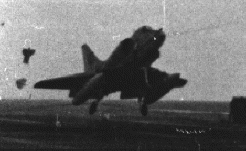 This article was published in the Spring 1994 issue of FOUNDATION
magazine by the Naval Aviation Museum Foundation. It is a personal story of my
least successful landing on the deck of the USS Lexington in an A-4 Skyhawk. Actually,
I landed just short of the deck. It
supports my claim to the shortest career on record as a Navy carrier pilot. In one
day I had two touch and go landings, three traps, one ramp strike, and one
in-flight engagement, and I walked away from it. Maybe there's something to this
indestructible theory.
This article was published in the Spring 1994 issue of FOUNDATION
magazine by the Naval Aviation Museum Foundation. It is a personal story of my
least successful landing on the deck of the USS Lexington in an A-4 Skyhawk. Actually,
I landed just short of the deck. It
supports my claim to the shortest career on record as a Navy carrier pilot. In one
day I had two touch and go landings, three traps, one ramp strike, and one
in-flight engagement, and I walked away from it. Maybe there's something to this
indestructible theory.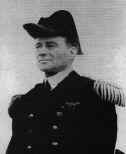 This
historical article was published in the fall 1996 issue of FOUNDATION. It is a
little known story of how Lieutenant Ken Whiting (pictured here) led the First Aeronautic
Detachment to France less than two months after the United States entered the
first World War. This unit was the first detachment of US Armed Forces to enter the war zone during
World War I. The article tells how the United States Navy's participation grew
and how Naval Aviation played such a vital role in winning this
conflict.
This
historical article was published in the fall 1996 issue of FOUNDATION. It is a
little known story of how Lieutenant Ken Whiting (pictured here) led the First Aeronautic
Detachment to France less than two months after the United States entered the
first World War. This unit was the first detachment of US Armed Forces to enter the war zone during
World War I. The article tells how the United States Navy's participation grew
and how Naval Aviation played such a vital role in winning this
conflict.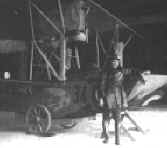 This companion article was published in the Spring 1997 issue of FOUNDATION.
It tells of Naval Aviation's participation in Italy during World War I. The
first naval aviator to win the Medal of Honor, Ensign Hammann, (pictured here) flew
his Macchi-5, an Italian seaplane, from
a base at Porto Corsini, Italy and won the Medal of Honor for rescuing a downed squadron mate
from waters of the Adriatic Sea off the main Austrian Naval Base at Pola. A
computer gremlin caused a printing error in this issue of FOUNDATION, but I have the
correct version on my laptop.
This companion article was published in the Spring 1997 issue of FOUNDATION.
It tells of Naval Aviation's participation in Italy during World War I. The
first naval aviator to win the Medal of Honor, Ensign Hammann, (pictured here) flew
his Macchi-5, an Italian seaplane, from
a base at Porto Corsini, Italy and won the Medal of Honor for rescuing a downed squadron mate
from waters of the Adriatic Sea off the main Austrian Naval Base at Pola. A
computer gremlin caused a printing error in this issue of FOUNDATION, but I have the
correct version on my laptop. 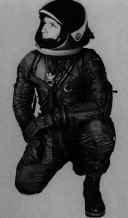 This article, first published in Journal of Aviation, Space, and
Environmental Medicine, was revised and published in the fall 1998 issue of FOUNDATION. It
tells the history of the Navy's flight surgeon/naval aviator program from Doctor
Clint DeFoney who learned to fly the Macchi-5 seaplane at Porto Corsini, Italy
in 1918 to today's dual designated flight surgeon/aviators who fly
research missions in high performance aircraft. Pictured here is a 1958
photo of me in the Navy's Mark IV full pressure suit. For more information on dual
designated military flight surgeon/pilots see the International Association of Military Flight
Surgeon Pilot's (IAMFSP) web site at
This article, first published in Journal of Aviation, Space, and
Environmental Medicine, was revised and published in the fall 1998 issue of FOUNDATION. It
tells the history of the Navy's flight surgeon/naval aviator program from Doctor
Clint DeFoney who learned to fly the Macchi-5 seaplane at Porto Corsini, Italy
in 1918 to today's dual designated flight surgeon/aviators who fly
research missions in high performance aircraft. Pictured here is a 1958
photo of me in the Navy's Mark IV full pressure suit. For more information on dual
designated military flight surgeon/pilots see the International Association of Military Flight
Surgeon Pilot's (IAMFSP) web site at 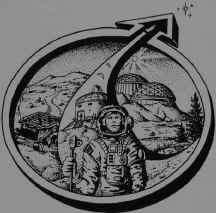 This paper was presented to the founding meeting of the Mars Society in
August of 1998 at the University of Colorado in Boulder and printed in their
proceedings. In it, I detailed some of the medical unknowns that must be solved
before we can expect to send a manned mission to Mars and highlighted NASA's
funding problem. Although NASA has accomplished much in the last forty years, I
question NASA's ability to conduct serious interplanetary exploration if they have
to continue going to Congress each year and begging for enough money to keep a limited number of
programs alive.
This paper was presented to the founding meeting of the Mars Society in
August of 1998 at the University of Colorado in Boulder and printed in their
proceedings. In it, I detailed some of the medical unknowns that must be solved
before we can expect to send a manned mission to Mars and highlighted NASA's
funding problem. Although NASA has accomplished much in the last forty years, I
question NASA's ability to conduct serious interplanetary exploration if they have
to continue going to Congress each year and begging for enough money to keep a limited number of
programs alive.  This paper was presented to the second annual meeting of the Mars Society in
August of 1999. In it I discussed NASA's funding problem and how other
government agencies have found ways to supplement their operating budget. I
believe that NASA has the potential to become completely self sufficient
and free of political constraints.
This paper was presented to the second annual meeting of the Mars Society in
August of 1999. In it I discussed NASA's funding problem and how other
government agencies have found ways to supplement their operating budget. I
believe that NASA has the potential to become completely self sufficient
and free of political constraints.  This paper
was presented at the third annual meeting of
the Mars Society in August of 2000 at the Ryerson Polytechnic University in
Toronto, Canada. It reviews forty years of scientific study and experience in
simulated and actual weightlessness, its effect on the human body and
countermeasures that have been proposed to prevent its debilitating effect
during a long duration space mission.
This paper
was presented at the third annual meeting of
the Mars Society in August of 2000 at the Ryerson Polytechnic University in
Toronto, Canada. It reviews forty years of scientific study and experience in
simulated and actual weightlessness, its effect on the human body and
countermeasures that have been proposed to prevent its debilitating effect
during a long duration space mission.